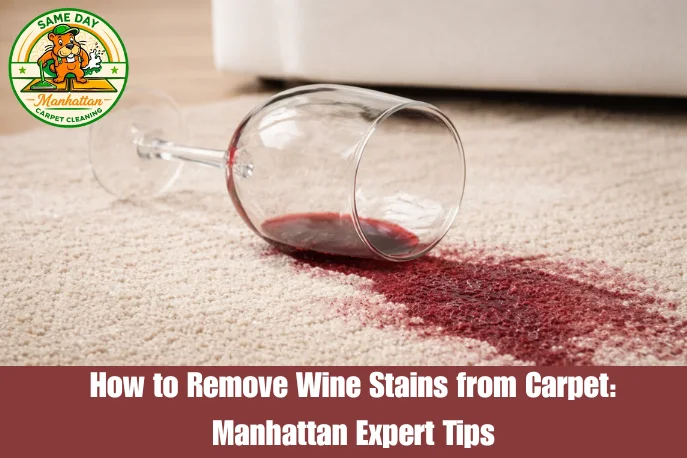
For fresh wine stains, immediately blot (never rub) with a clean white cloth, apply cold water, then blot with a mix of 1 tablespoon dish soap, 1 tablespoon white vinegar, and 2 cups warm water. For set-in wine stains or delicate carpets, professional extraction is your safest bet DIY methods risk permanent discoloration or fiber damage. We remove hundreds of wine stains monthly across Manhattan apartments, and the difference between a stain that lifts completely and one that sets permanently often comes down to what you do in the first 60 seconds.
Wine spills happen especially in Manhattan where apartment living means less distance between your glass and your carpet. Whether it’s a dinner party in your Upper East Side apartment or a quiet night in Greenwich Village, knowing how to handle wine stains can save your carpet from permanent damage. Below, we’ll walk you through immediate response steps, proven removal methods, what to avoid, and when to call our team at Same Day Manhattan Carpet Cleaning for professional treatment.
1. Immediate Action (First 60 Seconds)
The clock starts the moment wine hits your carpet. Here’s exactly what to do:
Step 1: Blot Immediately
Grab the nearest clean, white cloth or paper towels and blot the stain from the outside edges toward the center. Press firmly but don’t rub rubbing pushes wine deeper into carpet fibers and spreads the stain outward.
Why white cloths? Colored towels or printed paper towels can transfer dye to your wet carpet, creating a secondary stain problem. We see this constantly in Manhattan apartments where people grab whatever’s handy without thinking about color transfer.
Step 2: Apply Cold Water
Pour a small amount of cold water directly onto the stain just enough to dilute the wine, not soak the carpet. Blot again with fresh white cloths, repeating until you’re no longer pulling up red color.
Never use hot water on wine stains. Heat sets protein-based stains permanently by cooking them into the fibers. This is one of the most common mistakes we see when clients call us after their DIY attempts fail.
Step 3: Continue Blotting
Keep alternating between cold water application and blotting for 3–5 minutes. You should see progressively less wine transferring to your cloth with each blot. If the stain stops lifting after 5 minutes, stop and move to treatment solutions continuing to add water at this point just spreads the stain.
2. Proven DIY Wine Stain Removal Methods
Once you’ve completed immediate blotting, try these methods in order of effectiveness:
| Method | Best For | Effectiveness | Risk Level |
|---|---|---|---|
| Dish soap + vinegar solution | Fresh stains (under 30 min) | 70–80% removal | Low risk |
| Club soda | Very fresh stains (under 10 min) | 50–60% removal | Very low risk |
| Baking soda paste | Fresh to moderate stains | 60–70% removal | Low risk |
| Hydrogen peroxide + dish soap | Set-in stains (light carpets only) | 65–75% removal | Medium risk can bleach |
| Salt absorption | Fresh stains | 40–50% removal | Low risk |
| Commercial wine stain remover | Any stain age | 60–80% removal | Medium risk read labels |
Method 1: Dish Soap + White Vinegar Solution (Most Effective)
This is our recommended first-line treatment for fresh wine stains:
Mix together:
- 1 tablespoon clear dish soap (Dawn or similar)
- 1 tablespoon white vinegar
- 2 cups warm (not hot) water
Application:
- Apply solution to a clean white cloth (never pour directly on carpet)
- Blot the stain from outside edges toward center
- Let solution sit for 5–10 minutes
- Blot with cold water to rinse
- Repeat until stain lifts or stops improving
- Blot dry with fresh towels
The dish soap breaks down wine’s organic compounds while vinegar neutralizes the pH that causes red wine to bond with carpet fibers. We use a professional-grade version of this chemistry in our stain removal service.
Method 2: Club Soda (For Very Fresh Stains)
Club soda works because of carbonation that lifts stains to the surface:
- Pour club soda directly onto fresh wine stain
- Blot immediately with white cloths
- Repeat 3–4 times
- Finish with cold water rinse and blot dry
This method is most effective within 5–10 minutes of the spill. After that, wine has already started bonding to fibers and you need stronger treatment.
Method 3: Baking Soda Paste
For stains that have set for 15–30 minutes:
- Mix 3 parts baking soda to 1 part water to form thick paste
- Apply paste directly to stain
- Let sit for 2–3 hours (or overnight for stubborn stains)
- Vacuum thoroughly to remove dried paste
- Treat any remaining stain with dish soap/vinegar solution
- Rinse and blot dry
Baking soda absorbs wine while providing mild abrasive action. However, it can leave white residue in dark carpets if not vacuumed completely—something we frequently see in Tribeca and SoHo loft apartments with dark carpet.
Method 4: Hydrogen Peroxide + Dish Soap (Light Carpets Only)
For set-in wine stains on light-colored carpet (use extreme caution):
- Mix 2 parts hydrogen peroxide (3% solution) to 1 part dish soap
- Test on hidden carpet area first wait 10 minutes for color change
- If test shows no bleaching, apply small amount to stain
- Blot gently, let sit 5 minutes
- Rinse thoroughly with cold water
- Blot dry completely
WARNING: Hydrogen peroxide can permanently bleach carpet, especially on beige, tan, or colored fibers. We only recommend this for white or very light cream carpet, and even then, professional treatment is safer.
Method 5: Salt Absorption
This traditional method works for fresh spills:
- After initial blotting, cover entire stain with generous layer of table salt
- Let sit for 5–10 minutes as salt absorbs wine
- Vacuum up salt (it should be pink/red from absorbed wine)
- Follow with dish soap/vinegar treatment for any remaining stain
Salt works through osmotic action, pulling wine up from carpet fibers. However, it’s not effective on set-in stains and can leave residue that attracts future dirt if not vacuumed thoroughly.
3. What NOT to Do With Wine Stains
Avoid these common mistakes that make stains worse:
Never Rub or Scrub
Rubbing spreads wine outward and pushes it deeper into carpet backing and pad. This is the #1 mistake we see people panic and scrub vigorously, turning a 6-inch stain into a 12-inch disaster.
Always blot with pressing motion, lifting the cloth straight up rather than wiping across the surface.
Don’t Use Hot Water
Heat sets wine stains permanently by denaturing the proteins and anthocyanins (red pigments) in wine, essentially cooking them into your carpet fibers. Once heat-set, even professional treatment can’t fully remove the stain.
Always use cold or room-temperature water on wine spills.
Avoid Colored Towels or Cloths
In the panic of a spill, people grab whatever’s nearby often colorful kitchen towels or printed paper towels. These can transfer dye to wet carpet, creating a worse problem than the original wine stain.
Always use white cloths, white paper towels, or white terry cloth towels for blotting.
Don’t Over-Wet the Carpet
Pouring excessive water or solution creates secondary problems wine spreading to a larger area, water seeping into padding causing mold growth, and potential carpet delamination in older apartments.
Use minimal liquid and blot frequently. If you can squeeze water out of the carpet, you’ve applied too much.
Never Mix Cleaning Chemicals
Don’t combine random household cleaners hoping for better results. Some combinations create toxic fumes (like bleach + ammonia) or neutralize each other’s effectiveness (like vinegar + baking soda applied simultaneously).
Stick to one proven method, give it time to work, then rinse before trying another approach if needed.
Don’t Use Laundry Detergent
Laundry detergent creates excessive suds that are nearly impossible to rinse from carpet. The residue attracts dirt, leaving you with a clean-looking stain area that rapidly becomes a dark, dirty spot within weeks.
Use dish soap specifically it’s designed for lower suds and easier rinsing.
4. Different Wine Types Require Different Approaches
Not all wine stains are equal. Here’s what you’re dealing with:
Red Wine (Most Common & Difficult)
Red wine contains anthocyanins (pigments) and tannins that bond aggressively to carpet fibers, especially wool and light-colored synthetics. Fresh red wine stains respond to DIY treatment 70–80% of the time, but set-in red wine (over 24 hours) needs professional extraction.
In Manhattan apartments from Midtown to Lower Manhattan, we see hundreds of red wine stains monthly often from dinner parties where the spill wasn’t addressed immediately.
White Wine (Easier to Remove)
White wine lacks the heavy pigmentation of red wine, making it 90% easier to remove with standard dish soap solution. However, the sugar content can attract dirt over time if not thoroughly rinsed.
White wine stains rarely need professional treatment unless they’ve sat for weeks and developed bacterial growth or mold (common in humid Manhattan summer months).
Rosé (Moderate Difficulty)
Rosé falls between white and red in terms of stain difficulty. The lighter pigmentation means better DIY success rates (80–85%), but it still requires prompt treatment and thorough rinsing.
Port, Dessert Wines, or Sangria (Most Difficult)
These beverages combine wine’s pigmentation with high sugar content that becomes sticky and attracts dirt. The sugar crystallizes as it dries, creating a crunchy texture that’s difficult to remove without professional equipment.
For these stains, we strongly recommend professional carpet cleaning rather than DIY attempts. The sugar requires hot water extraction to fully remove, and attempting this with home equipment usually spreads the problem.
5. Carpet Type Considerations
Your carpet material dramatically affects wine stain removal success:
Wool Carpet (Common in Luxury Manhattan Apartments)
Wool is protein-based, which means wine bonds to it aggressively. Wool also can’t tolerate harsh chemicals or scrubbing without fiber damage.
For wool carpet in buildings throughout Upper West Side or Chelsea, stick to mild dish soap/vinegar solution and gentle blotting. If DIY doesn’t work within 20 minutes, call for professional treatment immediately wool is unforgiving of set-in stains.
Nylon Carpet (Most Common in Modern Apartments)
Nylon is stain-resistant and durable, giving you more leeway for DIY removal. Nylon fibers don’t bond to wine as aggressively as wool, and they tolerate stronger cleaning solutions.
Success rate for fresh wine on nylon: 80–90% with proper technique.
Polyester Carpet (Budget-Friendly Option)
Polyester is oleophilic (attracts oils) which can make wine stains more difficult. However, it’s also more colorfast than nylon, meaning you can use slightly stronger solutions without bleaching risk.
Olefin/Polypropylene (Often in Commercial Spaces)
This synthetic is highly stain-resistant because it’s solution-dyed (color throughout the fiber rather than surface-applied). Wine stains on olefin typically respond well to basic soap and water.
If you’re in a commercial space with olefin carpet, DIY removal usually succeeds unless the stain has been there for days.
Silk or Antique Rugs
Never attempt DIY wine removal on silk, Persian, Oriental, or valuable antique rugs. Wine on these materials requires specialized treatment to avoid permanent damage or color bleeding.
We offer dedicated Persian rug cleaning, Oriental rug cleaning, antique rug cleaning, and silk rug cleaning services specifically for these delicate materials.
6. Set-In Wine Stains (Over 24 Hours Old)
If the stain has dried or been there for days, your DIY options are limited:
What You Can Try:
Rehydrate the stain with cold water, then apply your strongest safe solution (dish soap/vinegar for most carpets, hydrogen peroxide for white carpet only). Let it dwell for 15–20 minutes, then blot thoroughly.
For old stains, you may need 3–4 treatment cycles with 30-minute rest periods between to allow the solution to break down bonded pigments.
When to Call Professionals:
If you’ve tried two different DIY methods and the stain hasn’t improved significantly, stop. Continued amateur treatment can:
- Over-wet the carpet causing mold in padding
- Damage fibers through excessive agitation
- Set the stain more deeply with heat or wrong chemicals
- Spread the stain to a larger area
Our professional carpet cleaning uses truck-mounted hot water extraction at temperatures and pressures that break wine-fiber bonds without damaging carpet. We also have commercial-grade stain removers not available to consumers.
For Manhattan apartments in West Village, East Village, or anywhere across the city, we offer same-day appointments for urgent stain situations call (347) 594-1006.
7. Professional Treatment vs. DIY: The Real Comparison
Here’s what we bring to wine stain removal that DIY can’t match:
Commercial Extraction Equipment
Our truck-mounted systems apply cleaning solution at 200°F and extract with 500+ PSI suction. This combination breaks the molecular bond between wine pigments and carpet fibers, then removes 95% of moisture in a single pass.
Home carpet cleaners (like Bissell or Hoover portables) can’t achieve these temperatures or extraction rates. They typically leave carpets soaking wet, spreading stains rather than removing them.
pH-Balanced Professional Solutions
We use professional stain removers formulated specifically for wine tannins and anthocyanins. These products work at the molecular level to neutralize pigments without damaging fibers or bleaching color.
Consumer products available in stores are general-purpose and much less effective on specific stain types.
Fiber Identification & Customized Treatment
Before treating any stain, we identify your carpet fiber type and construction method. Wine removal on wool requires completely different chemistry than nylon, and valuable rugs need specialized approaches.
DIY methods use one-size-fits-all solutions that may work great on one carpet type while damaging another.
Stain Wicking Prevention
When wine soaks through to the carpet pad, home cleaning only addresses the surface. Days later, the stain “wicks” back up from the pad to the surface, looking like it was never cleaned.
Our sub-surface extraction removes wine from padding and backing, preventing wicking entirely.
Guaranteed Results
If we can’t remove your wine stain to your satisfaction, we tell you upfront and discuss replacement options rather than charging for ineffective treatment. With DIY, you’ve invested time and money before knowing if it will work.
8. Prevention Tips for Wine Lovers in Manhattan Apartments
If you regularly enjoy wine at home, these strategies minimize stain risk:
Carpet Protection Treatment
After professional cleaning, we can apply scotchgard or similar protectant that creates a barrier between carpet fibers and liquids. This gives you extra time to blot spills before they penetrate and set.
Protection treatment costs $50–$100 for an average Manhattan apartment and lasts 6–12 months. It’s particularly valuable for light-colored carpet in entertaining spaces.
Strategic Area Rug Placement
In homes where wine is served regularly, consider placing washable area rugs in high-risk zones—under dining tables, in front of couches, near entertaining areas.
If wine spills on an area rug, you can often remove and treat it separately or use our area rug cleaning service without disrupting your entire apartment.
Stemless Wine Glasses
While not stain-prevention per se, stemless glasses are more stable and less likely to tip over on carpet. This is especially relevant in compact Manhattan apartments where furniture is close together and accidental bumps are common.
White Wine Emergency Kit
Keep a dedicated stain kit in an easily accessible location:
- White terry cloth towels (at least 6)
- Spray bottle with pre-mixed dish soap/vinegar solution
- Cold water in a squeeze bottle
- White paper towels
- Commercial wine stain remover (optional backup)
When a spill happens during a party, you can act immediately without hunting for supplies.
Regular Professional Cleaning
Residential carpet cleaning every 6–12 months removes accumulated light stains before they become permanent. Wine stains that didn’t fully lift with DIY treatment often disappear during professional deep cleaning.
9. Special Situations & Manhattan-Specific Challenges
Pre-War Apartment Considerations
Older buildings in neighborhoods like Harlem, Morningside Heights, and Inwood often have original carpet padding that’s decades old. Wine that soaks through reaches deteriorated padding that can’t be effectively cleaned without replacement.
If you’re in a pre-war building and wine soaks completely through to padding, professional assessment is critical you may need pad replacement to prevent odor and mold issues.
High-Rise Building Logistics
For wine stains requiring emergency professional treatment, high-rise buildings present access challenges. Elevator reservations, doorman coordination, and equipment transport all add time.
If you’re in a doorman building in Midtown East or Battery Park City, call us immediately after the spill so we can coordinate building access while you perform initial blotting.
Rental Agreement Concerns
Many Manhattan renters worry about carpet stains affecting security deposits. If you can’t remove a wine stain with DIY methods within 24 hours, getting professional treatment immediately is cheaper than losing your deposit.
We provide documentation and before/after photos for landlord disputes if needed.
Move-Out Carpet Cleaning
Wine stains discovered during move-out prep present tight timelines. Our emergency carpet cleaning service handles same-day appointments specifically for these situations.
10. Related Stain Removal Services
Wine isn’t the only challenging stain we handle:
Pet Accidents
Similar organic chemistry to wine makes pet stains equally challenging. Our pet stain removal service uses enzymatic treatments that break down organic compounds and eliminate odors at the source.
Coffee & Tea
These tannin-based stains require similar treatment to wine. The same dish soap/vinegar solution works well for fresh coffee spills.
Food & Grease
Oil-based stains need different chemistry than wine. Our stain removal service handles everything from cooking oil to makeup to ink.
Odor Issues
Sometimes wine spills aren’t visible but leave lingering odors, especially if they soaked into padding. Our odor removal service eliminates smells that standard cleaning can’t address.
Upholstery Wine Stains
If wine hit your couch or chairs, the same blotting principles apply, but upholstery fabrics require gentler treatment. Check out our couch cleaning and upholstery cleaning services for fabric furniture.
11. Cost Comparison: DIY vs. Professional Treatment
DIY Wine Stain Removal Costs:
- White cloths/towels: $10–$20 (if you don’t have them)
- Cleaning supplies (dish soap, vinegar, etc.): $15–$25
- Commercial wine stain remover: $8–$15 per bottle
- Portable carpet cleaner rental (if needed): $30–$50/day
- Total: $25–$110
Professional Wine Stain Removal:
- Spot treatment for single stain: $75–$125
- Full room treatment if stain has spread: $150–$250
- Whole apartment cleaning (if addressing multiple stains or old issues): $200–$450
- Success rate: 90–95% for fresh stains, 70–80% for set-in stains
The real calculation isn’t just money it’s the value of your carpet. If DIY fails and the stain becomes permanent, you’re looking at:
- Carpet replacement for one room: $500–$1,500
- Whole apartment carpet replacement: $2,000–$6,000+
- Lost security deposit (renters): $500–$2,000
Professional treatment costs more upfront but has dramatically higher success rates and protects your long-term investment.
12. Common Questions About Wine Stain Removal
“How long do I have before wine stains permanently?”
Fresh wine stains can be successfully treated up to 24 hours after the spill, but success rates drop significantly after the first hour. Once wine dries completely (4–8 hours depending on carpet type), it bonds more aggressively to fibers.
The best answer: treat immediately within 5 minutes if possible.
“Does white wine really remove red wine stains?”
This is a myth. While white wine’s acidity might slightly dilute red wine, it adds more liquid to your carpet and doesn’t effectively remove pigments. Stick to proven cleaning solutions rather than folk remedies.
“Can I use bleach on wine stains?”
Absolutely not, unless you want permanent white spots on your carpet. Bleach destroys carpet dyes and weakens fibers. Even on white carpet, bleach can yellow over time and damage backing materials.
“Will professional cleaning guarantee complete removal?”
No cleaning method can guarantee 100% removal of all stains. Wine that’s been there for weeks or months may have permanently altered fiber dye structure. However, professional treatment achieves 90–95% improvement on fresh stains and 70–80% on set-in stains far better than DIY rates.
We always provide honest assessment before treatment and let you know if we think the stain is beyond saving.
“How do I handle wine spills on valuable rugs?”
Blot gently with white cloth, apply cold water sparingly, then call professionals immediately. Don’t attempt DIY cleaning on Persian rugs, Oriental rugs, antique rugs, or silk rugs the risk of permanent damage is too high.
Summary: Your Wine Stain Removal Action Plan
For Fresh Spills (Under 30 Minutes):
- Blot immediately with white cloth never rub
- Apply cold water, continue blotting
- Mix dish soap/vinegar solution (1 tbsp each in 2 cups warm water)
- Apply to cloth, blot stain from outside in
- Rinse with cold water, blot dry
- Repeat until stain lifts or stops improving
- If no improvement after 3 cycles, call professionals
For Set-In Stains (Over 24 Hours):
- Attempt one round of dish soap/vinegar treatment
- If no significant improvement, stop DIY attempts
- Call Same Day Manhattan Carpet Cleaning at (347) 594-1006
- Schedule same-day or next-day professional treatment
For Valuable or Delicate Rugs:
- Blot gently with white cloth
- Apply minimal cold water
- Call professionals immediately don’t attempt further DIY
Never:
- Use hot water (sets stain permanently)
- Rub or scrub (spreads and embeds stain)
- Apply colored towels (transfers dye)
- Use bleach or harsh chemicals
- Over-wet the carpet
The bottom line: wine stains are among the most common carpet disasters in Manhattan apartments, but they’re also highly treatable when you act fast and use proper technique. DIY methods work great on fresh spills if you follow the rules cold water, blotting only, proper solutions, and patience.
But when you’re dealing with valuable carpet, expensive rugs, set-in stains, or just want guaranteed results, professional treatment is the smart choice. We’ve seen too many DIY disasters where well-intentioned homeowners turned a removable stain into permanent damage by using the wrong approach.
We’re located at 41 Perry St in the West Village and service every Manhattan neighborhood from Hudson Heights to Governors Island, Financial District to Washington Heights. Call us at (347) 594-1006 for same-day wine stain treatment or to discuss whether your specific situation needs professional intervention.